Some jobs need paint.
Others need obsession.
Most of what makes a door last is invisible by the time you see it. That is an awkward thing to sell, so this page is about the part nobody photographs.
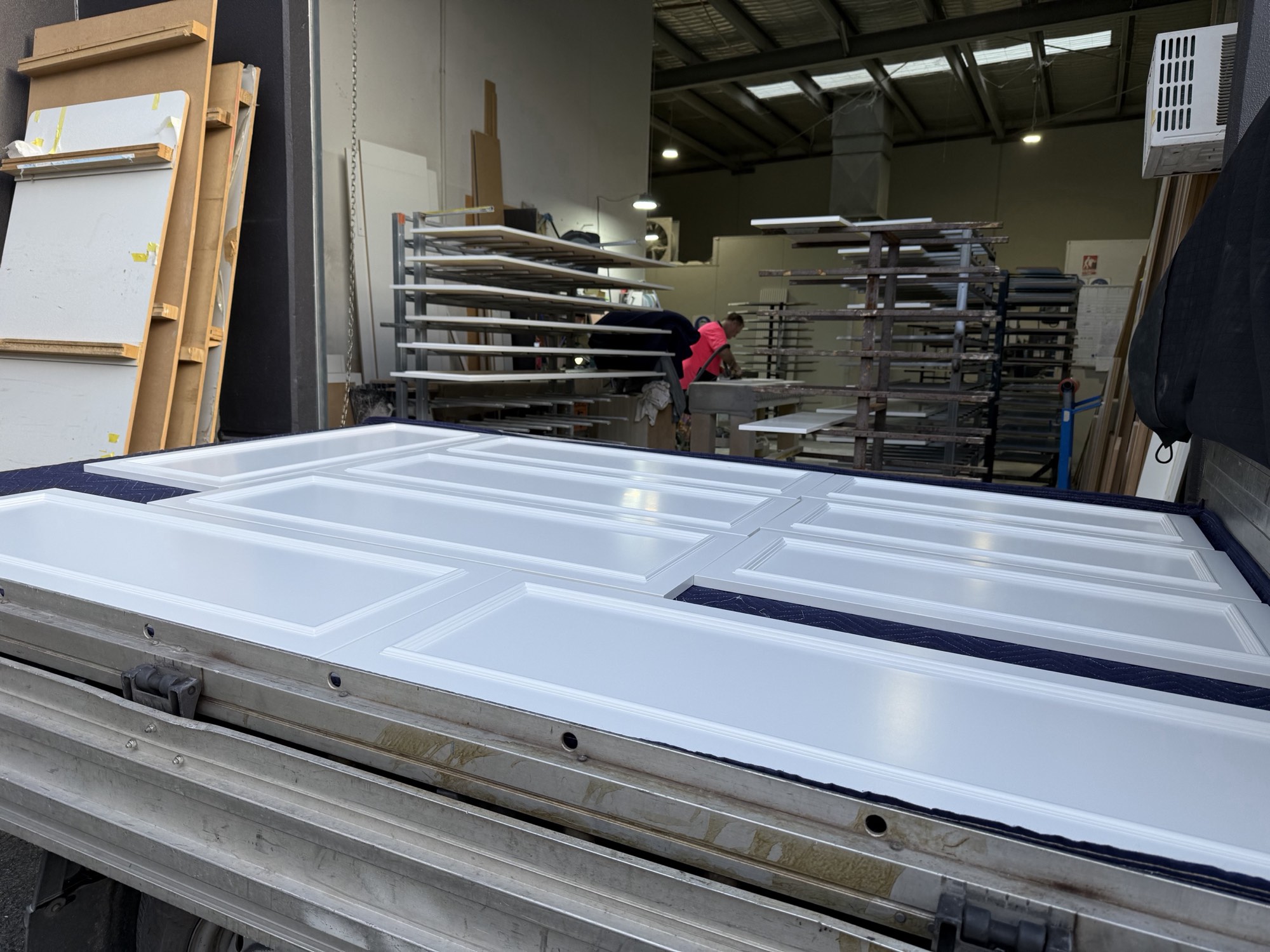
The edges are the job
Almost every failed kitchen door failed at an edge. Unsealed MDF drinks moisture from cleaning and from the steam coming off a dishwasher, and it swells from the outside in. You cannot see it happening and you cannot undo it. So edges get sealed properly here as a matter of course, not as an upgrade: it is the single decision that separates a door that lasts a decade from one that does not.
Two-pack magnifies everything under it
A catalysed coating is hard, washable and holds a real depth of sheen. It is also completely unforgiving. Sanding scratches, unfilled chips and old filler all telegraph straight through it, and gloss magnifies them further than satin does. Most of the hours in any job go into the board before a gun is picked up, which is why two doors that look identical in a photograph can be a day apart in preparation.
The whole set gets sprayed together
Colour drifts between sessions. On a single door nobody would notice; across a wall of twenty you would see it from the doorway. So a kitchen goes through as one batch rather than as whatever fits in this afternoon, even when that is less convenient for us.
Profiles are bought for their detail
A shaker door, a V groove, a fluted island front: you paid for the shape. Load too much material into it and internal corners fill, shoulders soften and a V becomes a U. Profiled work goes on in lighter passes and more of them, and it gets checked by raking a light along it rather than looking at it square on. That is why it sits on a different line of the price list.
We would rather tell you no
Sometimes a door has had its life. MDF that has swollen has changed shape permanently, and laminate that has already lifted may not hold a coating at all. Spraying it anyway is money spent twice. If that is what we find at strip, you will hear it then rather than at the end.
Show us
the doors.
Nine questions and up to ten photos. You get the likely process, the rate lines it falls under and an indicative range: then it goes to the workshop for a human to look at properly.
Estimates are indicative only, worked against our published rates. Final pricing is confirmed by Coastal 2PAC after the job has been inspected or reviewed.
- 01What are we working onKitchen, robe, doors, panels, trim
- 02What needs doingNew, respray, repair, clear over veneer
- 03Surface and conditionMDF, melamine, veneer, and what state it is in
- 04Finish and profileSatin or gloss, flat or routed: the rate follows this
- 05SizeA band, or real measurements if you have them
- 06Photos and the result you wantUp to ten, then in your own words