Clear Veneer Finishing
Clear coating over veneer is the opposite problem to colour. There is nothing to hide behind: the grain is the finish, and every mark in the sanding shows through it permanently.
- Timber veneer · Solid timber · Veneered MDF and board
- Clear satin · Clear gloss · Full UV protection
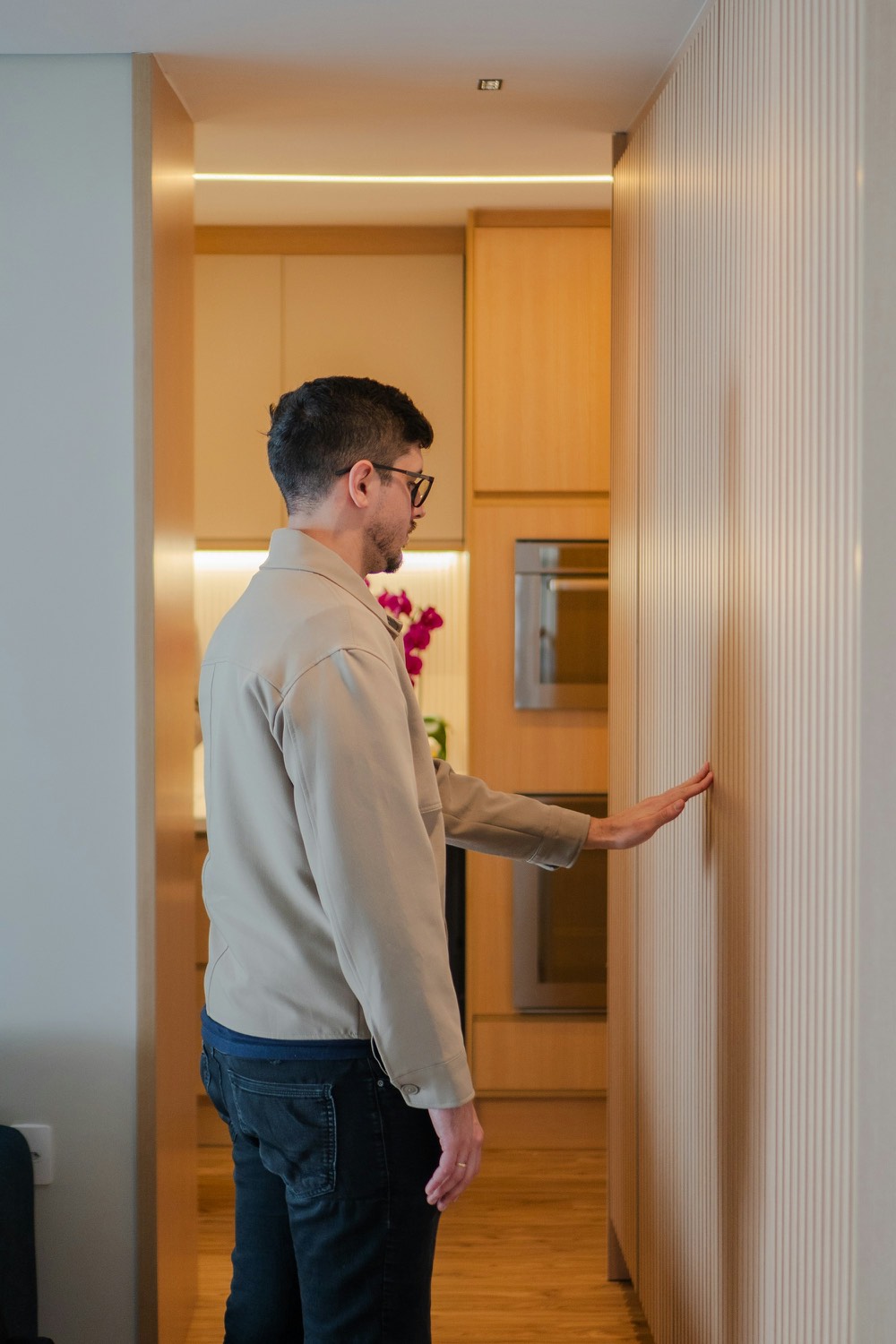
Veneer is thin. It sands through far more easily than solid timber, and once it is through there is no repair that does not show. Preparation here is about restraint as much as effort.
The clear carries full UV protection, which is what stops a pale veneer going orange and a dark one going grey over a few Queensland summers. That protection is in the coating, not in the timber.
Grain raises when it is coated. It gets cut back between coats so the finished surface is smooth rather than furry, which is a step that is easy to skip and impossible to hide.
How it runs
- 01Assess the veneerThickness and existing finish checked before sanding.
- 02PrepareSanded with restraint: veneer goes through easily.
- 03SealSealer coat, then the raised grain cut back.
- 04ClearTwo-pack clear with UV protection, built in coats.
- 05Cure and inspectChecked across the grain under booth light.
Questions we actually get
- Will the veneer still go orange over time?
- The clear carries full UV protection, which is what slows that down. No coating stops light entirely, but the difference between a UV-protected two-pack clear and an unprotected finish over a few Queensland summers is substantial.
- Can you clear coat over damaged veneer?
- Sometimes. Because clear hides nothing, anything sanded through or badly water marked will still be visible afterwards. Send photos and we will tell you honestly what it will look like.
Related services
Show us
the doors.
Nine questions and up to ten photos. You get the likely process, the rate lines it falls under and an indicative range: then it goes to the workshop for a human to look at properly.
Estimates are indicative only, worked against our published rates. Final pricing is confirmed by Coastal 2PAC after the job has been inspected or reviewed.
- 01What are we working onKitchen, robe, doors, panels, trim
- 02What needs doingNew, respray, repair, clear over veneer
- 03Surface and conditionMDF, melamine, veneer, and what state it is in
- 04Finish and profileSatin or gloss, flat or routed: the rate follows this
- 05SizeA band, or real measurements if you have them
- 06Photos and the result you wantUp to ten, then in your own words